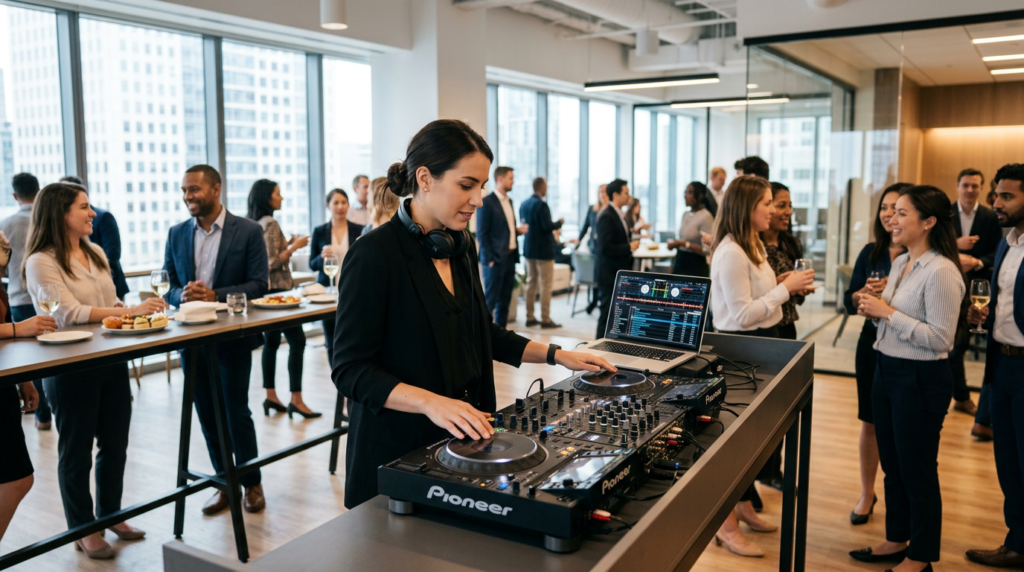
Quick answer: Hire a corporate DJ by matching the music style and vibe to your event goals, confirming they can handle announcements and timing, and checking their equipment plan for your venue. Ask for a clear run sheet, setup and soundcheck times, and how they take requests without derailing the mood. Lock in the date with a written agreement covering hours, overtime, and backup plans.
Start With the Event Brief, Not the Playlist
Before you contact anyone, write a quick event brief: the type of event (awards night, holiday party, product launch), the expected age range, the venue rules, and the “energy curve” you want (background during networking, bigger lift after dinner, then a peak set). That brief makes the first call productive and stops you from hiring someone who’s great at clubs but not great at corporate pacing.
When you reach out to a corporate dj, ask how they handle mixed groups: clean edits, volume control during speeches, and the ability to shift genres without awkward stops. A solid corporate DJ will usually talk about reading the room, not just naming artists. They should also be comfortable working alongside an MC, event manager, or AV team and sticking to a schedule.
Booking Checklist You Can Copy and Paste
Use this as a quick email template so you can compare DJs on the same points.
Music / programming
- What vibe do you recommend for arrivals/networking vs later dancing?
- Can you work from a short “must-play” list and a “do-not-play” list?
- How do you handle requests without losing the room’s momentum?
MC / speeches
- Can you make announcements, or should we provide a separate MC?
- How do you coordinate cues with an event manager (hand signals, WhatsApp, run sheet)?
- Can you provide walk-on music and short stings for speakers/award winners?
Equipment / backup
- What sound system is included, and what size room/crowd is it typically suited for?
- How many microphones are included (handheld/lapel), and are they wireless?
- What backup plan do you have for a laptop/controller/mic failure?
Venue logistics
- How much setup/soundcheck time do you need, and what’s your arrival time?
- What power requirements do you have, and do you need a dedicated circuit?
- Do you need a specific stage/table size, and where should you be positioned in the room?
Contract terms
- What are the performance hours, and how is overtime handled?
- What’s the payment schedule, cancellation policy, and reschedule policy?
- What details do you need from us by what deadline (final timings, playlists, contacts)?
Venue and Logistics That Can Make or Break the Night
Many DJ issues at company events come from the room, not the music. Common failure points include: (1) weak or shared power that trips when catering equipment kicks in, (2) poor speaker placement that causes feedback near microphones, and (3) a DJ setup location that blocks sightlines or sits too close to a wall of chatty guests. A quick site check (or a detailed venue brief) reduces surprises.
Plan timing: many DJs need roughly 45–90 minutes to set up and soundcheck, depending on the room and gear. If your schedule is tight, ask what they need from the venue in advance (parking, lift access, set-up window). If you’re running presentations, ask how they connect a laptop for walk-on music and stings, and who presses play so cues don’t get missed.
Sample Run Sheet (Timeline) and What to Put in Writing
Here’s a simple run sheet you can adapt. It shows where DJs typically add the most value with pacing and cues.
4:30 pm DJ arrival / load-in
4:45 pm Setup begins (speakers, booth, lighting)
5:15 pm Soundcheck: background music level in the room
5:25 pm Mic check: handheld from the exact speech spot; test for feedback
5:30 pm Doors open / networking (low-to-mid energy, conversational volume)
6:30 pm Call to dinner (short cue sting, then drop volume)
6:35 pm Dinner service (background set; keep peaks minimal)
7:15 pm Speeches begin (mic check again if the room filled up)
7:45 pm Awards segment (walk-on stings for winners; keep transitions tight)
8:30 pm Post-awards reset (tempo lift; invite to dance)
8:45 pm Dancing (build energy in waves; accept requests selectively)
10:45 pm Last call / final song cue (as agreed with venue)
11:00 pm Finish / pack down
A simple written agreement prevents misunderstandings. Confirm date, location, performance hours, setup time, and what counts as overtime. Spell out who provides the run sheet, when final timing is due, and what happens if the event runs late. Also confirm contingency plans (backup gear and a substitute option), plus the day-of contact person. Request a written quote and confirm the contract terms; if you want local help comparing options, you can also contact SpinSisters LTD.